Newsletter Subscribe
Enter your email address below and subscribe to our newsletter

 ByJohn A
Technology is pushing precision agriculture toward tighter data integration and real-time decisioning. Sensors, imagery, and weather models feed scalable analytics that guide field interventions. Drones, ground rovers, and autonomous equipment convert insights into targeted actions—spraying, irrigation, nutrient management—while governance and traceability ensure accountability. Implementation requires disciplined pilots and clear ROI models. The emerging standardization and privacy safeguards offer repeatable outcomes, but the complexities behind each deployment invite closer consideration of costs, risks, and long-term impact.
Precision agriculture is the systematic use of data and technology to optimize crop production and resource use.
The field centers on precision farming, deploying GPS, sensors, and management zones to minimize input waste while maximizing yield.
Tech matters because data governance ensures privacy, traceability, and standardized practices.
Decisions rely on verifiable metrics, not guesswork, fostering sustainable, scalable farming outcomes and farmer autonomy.
Sensing, data streams, and analytics form the engine behind field decisions, translating observations from sensors, imagery, and weather models into actionable insights. The approach centers on visible, near-real-time signals and robust models, enabling precise interventions.
Sensors for soil quantify moisture and nutrients; data driven irrigation optimizes water use, reduces waste, and sustains yields through disciplined, transparent decision workflows.
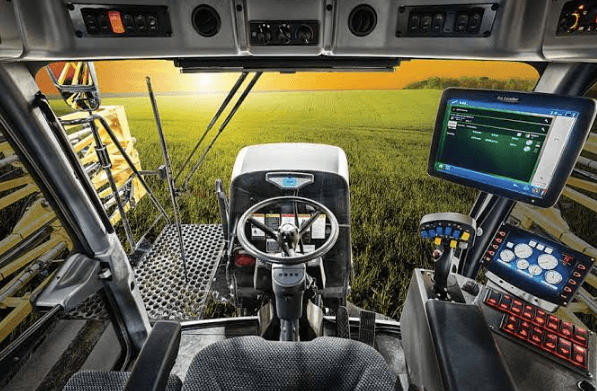
Advances in unmanned aerial systems, ground-based rovers, and autonomous machinery are redefining field operations by delivering scalable, real-time data collection and execution capabilities.
These platforms emphasize modular hardware, rugged sensors, and interoperable controls that reduce human labor while increasing precision.
Drone payloads enable targeted spraying and imaging, while autonomous harvesters illustrate the shift toward hands-free, data-driven, efficiency-oriented farm operations.
How can a farm effectively translate rapid technical progress into tangible gains? Adoption hinges on disciplined planning, measurable pilots, and scalable data flows.
The analysis of implementation ROI clarifies payback and risk, while phased rollouts reveal best practices challenges.
Investors and operators benefit from transparent metrics, vendor alignment, and training, ensuring technologies translate into reliability, yield, and cost control across diverse field conditions.
Choosing technology requires evaluating needs, ROI, and integration, while emphasizing data governance; a balanced mix aligns sensors, analytics, and automation, ensuring scalable, secure decisions. The detached observer notes industry benchmarks, vendor support, and ongoing adaptability for freedom-loving operators.
Sparked by dawn-lit rows, privacy concerns and data ownership shape sensor use on farms. The detached analyst notes ownership disputes, access controls, and consent gaps, emphasizing transparent data governance, secure sharing terms, and clear rights to harvested environmental information.
Small farms can achieve affordable scalability in precision agriculture, though limitations exist; prudent choices and phased investments matter. Data ownership concerns persist, but transparent practices and cooperative models help. Free-minded operators value cost-conscious, verifiable, autonomy-preserving solutions.
See also: How Technology Is Advancing Organizational Performance
Yield accuracy in variable fields varies; most models achieve moderate precision, with higher accuracy where soil variability is well-sampled and input data rich. Predictions improve with dense sensing, but uncertainty remains from micro-variability and model assumptions.
One interesting statistic notes that 70% of farm staff complete training within two weeks. Quick onboarding and vendor tutorials guide adoption, with structured modules, hands-on practice, and measurable milestones, ensuring data-driven, industry-aware progress while preserving operational autonomy and freedom.
Technology-enabled precision agriculture is transforming field decisions with measurable returns. A pivotal stat illustrates its impact: farms implementing variable-rate irrigation report water use reductions up to 30% while maintaining yields. Core advances—sensing, data fusion, and modular hardware—enable targeted interventions at scale. Adoption hinges on disciplined pilots, transparent ROI, and standardized governance. As interoperability and privacy safeguards mature, the sector can expect deeper sustainability, traceable inputs, and repeatable performance across diverse crops and geographies.